
7 Questions to Ask Before Buying Your First E‑Cigarette
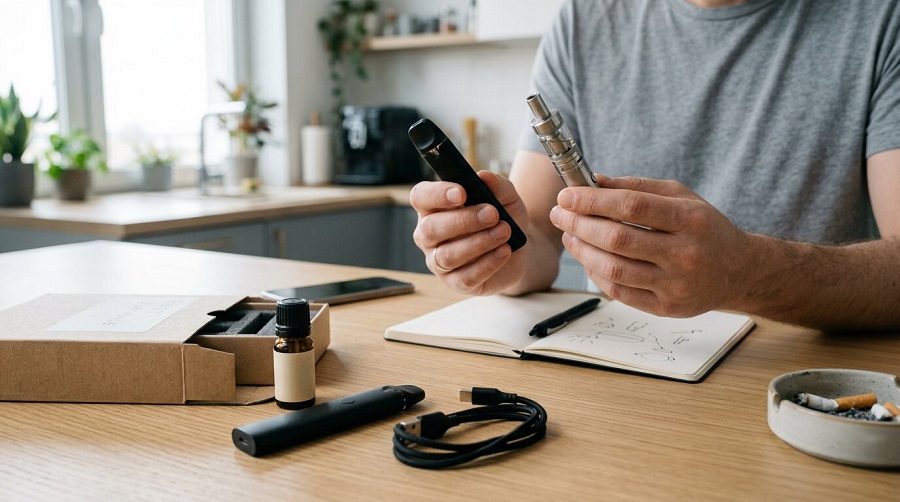
If you’re thinking about buying your first e‑cigarette, it’s worth pausing before you click “add to cart.” The right choice depends on how you smoke now, how much nicotine you actually need, and how much effort you’re willing to put into upkeep. From battery life to flavour and cost, small decisions can make a big difference to whether you stick with it—or give up after a week because…
What Kind of Smoker Are You – And Which First Vape Fits?
Before choosing a first vape, it helps to identify what kind of smoker you are, as your current habits influence which device, nicotine strength, and battery capacity are likely to work for you.
Start with how much you smoke:
- • If you smoke more than 20 cigarettes per day, you may need a higher nicotine strength (for example, 18–20 mg/ml freebase or nicotine salts in a similar range, depending on local regulations and your tolerance). In this case, a closed pod system or cigalike with a battery capacity around 1000–2000 mAh can provide sufficient power and runtime.
- • If you smoke only occasionally or socially, a lower nicotine strength (around 3–6 mg/ml) in a small, discreet pod device is often sufficient and may feel more comfortable.
Your draw style also matters:
- • If you prefer a cigarette‑like pull, look for a mouth‑to‑lung (MTL) device, typically using coils in the range of about 1.0–1.8 Ω. These are designed to replicate the tighter draw and vapor volume closer to that of a traditional cigarette.
Which Type of E‑Cigarette Best Fits Your Lifestyle?
Once you understand your smoking pattern—both frequency and nicotine dependence—you can better match it with the right type of e-cigarette. For those who smoke more heavily, devices with larger batteries, such as refillable pens or box mods in the 2000–3000+ mAh range, often provide longer use between charges and more consistent performance. Meanwhile, lighter smokers may find slim cigalikes or compact pod systems more practical, as their smaller battery capacity typically aligns with occasional use.
Inhalation style is another important factor. A tighter, mouth-to-lung (MTL) draw tends to replicate the familiar sensation of a traditional cigarette, making it a common choice for beginners. On the other hand, devices designed for a loose draw can produce larger vapor clouds, though they may feel less similar to smoking.
Maintenance also varies significantly between device types. Cigalikes and closed pod systems are generally low-maintenance, often relying on pre-filled cartridges or pods. In contrast, refillable pods and pen-style devices require more involvement—such as refilling e-liquid, replacing coils, and occasional cleaning—to keep performance consistent and hygienic.
When comparing options, it’s worth considering factors beyond convenience, including flavor variety, long-term costs, and environmental impact. Refillable systems, for example, often provide more flexibility in nicotine strength and flavor selection while potentially reducing ongoing expenses and waste over time.
If you want to make more informed decisions, you can check out Vapofil, a blog dedicated to the world of e-cigarettes, vapes, and CBD. Here, you’ll find honest reviews, detailed tests, and clear comparisons designed to help both beginners and experienced users choose devices that truly fit their lifestyle.
How Much Nicotine Should Your First Vape Use?
Finding an appropriate nicotine strength for a first vape depends mainly on how much you currently smoke and the type of device you use. Matching your usual cigarette intake can help reduce cravings without making the vapor feel too harsh.
As a rough guide for traditional cigarettes per day:
- • Up to 5: around 3–6 mg/ml
- • 5–10: around 6–12 mg/ml
- • 10–15: around 12–16 mg/ml
- • 15–20: around 16–18 mg/ml
- • More than 20: close to 20 mg/ml
Nicotine salts are typically used at higher strengths (e.g., 10–20 mg/ml or more) because they tend to feel smoother on the throat. Freebase nicotine is more common at lower strengths (e.g., 0–12 mg/ml) and usually produces a stronger throat hit at the same concentration.
Device type also matters:
- • Mouth-to-lung (MTL) starter kits: many users find around 12 mg/ml (or moderate-strength salts) a reasonable starting point.
- • Direct-to-lung (DTL) devices: these produce more vapor per puff, so lower strengths (0–6 mg/ml) are generally recommended to avoid excessive nicotine intake.
It is advisable to start at the lower end of the appropriate range for your smoking level and adjust gradually based on how well it controls cravings and how comfortable it feels. Always follow local regulations on maximum nicotine concentrations and consider seeking advice from a healthcare professional if you're using vaping as a smoking cessation aid.
Which E‑Liquid Flavour and PG/VG Mix Will You Enjoy?
After selecting an appropriate nicotine strength, the next step is choosing an e‑liquid flavour and PG/VG ratio that you can use comfortably on a daily basis. A practical approach is to begin with flavour profiles you already know you enjoy. Tobacco or menthol flavours may suit those who miss the taste or sensation of cigarettes, while fruit, dessert, and beverage flavours may be more suitable for individuals who prefer sweeter tastes. Buying sample packs or smaller bottles (e.g., 10–30 ml) allows you to test different options without committing to large quantities.
Propylene glycol (PG) is effective at carrying flavour and producing a stronger throat hit, which some users associate with the sensation of smoking. Ratios such as 50/50 or 60/40 PG/VG often provide a more cigarette‑like feel.
Vegetable glycerin (VG) produces denser vapour and a smoother inhale; ratios with 70% or more VG tend to generate larger clouds and a softer throat hit. If you notice dryness, irritation, or other discomfort that you suspect is related to PG, it may be advisable to move toward higher‑VG blends and monitor whether symptoms improve.
How Much Vape Kit Maintenance Can You Handle?
How much ongoing maintenance are you realistically willing to handle for your vape?
If you prefer minimal upkeep, disposable vapes or closed pod systems may be more suitable. These typically require no cleaning or coil changes—you replace the pod or the entire device when it's empty or the performance declines.
Refillable kits and box mods involve more regular maintenance. You'll need to:
- • Refill e‑liquid when the tank or pod is low
- • Replace coils roughly every 1–4 weeks, depending on use and e‑liquid type
- • Clean tanks and mouthpieces to reduce residue buildup and prevent burnt or off‑flavors
Devices with internal batteries need periodic USB charging and basic care to avoid damage. Mods that use external batteries add extra steps, such as using an appropriate charger, monitoring battery condition, and storing cells safely in proper cases.
It is also useful to understand basic maintenance tasks, such as:
- • Priming new coils before use
- • Wiping excess liquid from contacts and connections
- • Checking seals and O‑rings for wear or leaks
How Long Should Your E‑Cigarette Battery Last Each Day?
Battery life is a key practical factor in daily vaping, so it's useful to match battery capacity to your typical use. Capacity is measured in milliampere-hours (mAh). Smaller devices such as pod kits and cigalikes usually range from about 200 to 1000 mAh, while vape pens and box mods commonly range from 1000 to over 3000 mAh.
For light use, such as a few puffs per hour, a battery in the 200–600 mAh range can often last through a day. Former moderate or heavy smokers who vape more frequently typically benefit from 1000–2000 mAh devices.
Higher power settings (wattage) and low-resistance coils consume more energy, which shortens battery life per charge. In these cases, capacities in the 2000–3000 mAh range, along with features such as clear battery level indicators and faster USB‑C charging, can provide more consistent daily performance.
Is Your First E‑Cigarette Safe, Legal and Worth the Money?
When choosing your first e‑cigarette, it's important to consider safety, legality and cost, not just whether it might help you stop smoking.
In the UK and EU, you should check that the device complies with relevant standards by looking for CE or UKCA markings and by purchasing from established, reputable retailers or brands.
Check that the device includes basic battery protections, such as safeguards against overcharging, short‑circuits and overheating, and use the charger provided by the manufacturer.
For e‑liquids, the label should clearly list the main ingredients, typically propylene glycol (PG), vegetable glycerine (VG), flavourings and nicotine.
In the UK, nicotine strength in e‑liquids sold legally is limited to 20 mg/ml under the Tobacco and Related Products Regulations, so products exceeding this level are unlikely to be compliant.
From a cost perspective, compare the ongoing price of coils and e‑liquid with your usual cigarette spending.
For many smokers, refillable mouth‑to‑lung (MTL) starter kits can become less expensive than smoking over time, provided the device is used regularly and maintained properly.
Conclusion
When you ask these seven questions, you turn your first vape from a guess into a smart choice. You match your device, nicotine strength, and e‑liquid to how you actually smoke and live, not how someone else does. Take a moment to weigh your habits, budget, and preferences, then pick a kit that fits your routine today—and can adapt as your needs change tomorrow.